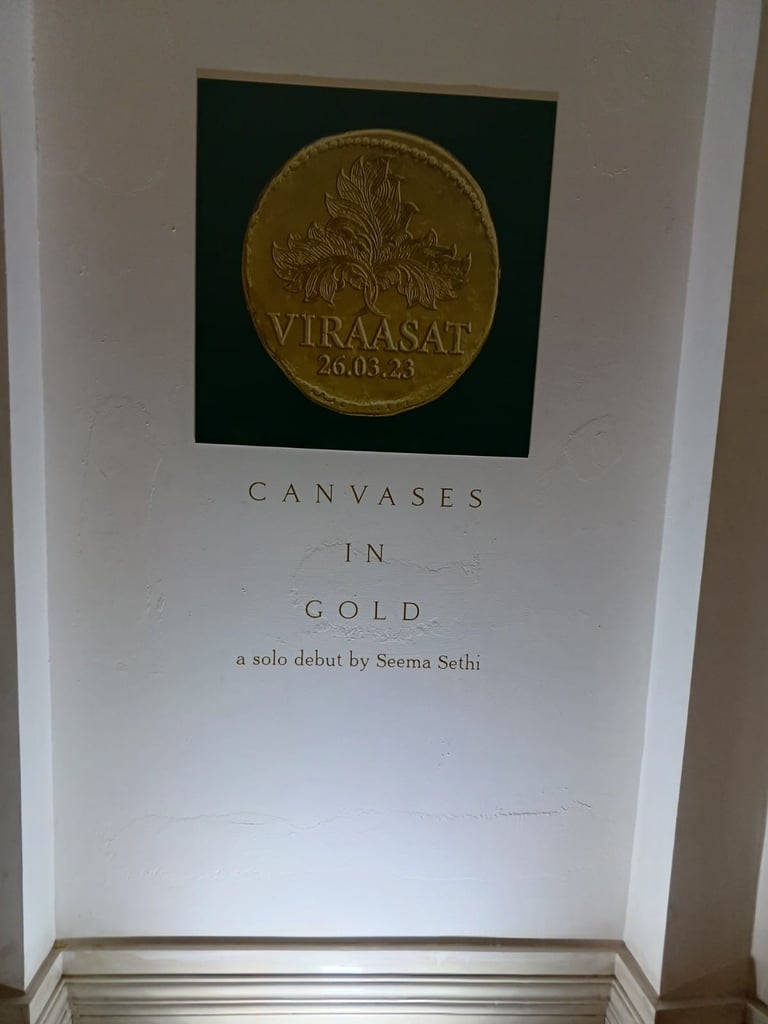
VIRAASAT
An Ode to our rich cultural heritage, crafted through the Glow of Tanjore.
"Viraasat" is my tribute to the rich cultural heritage that we all have inherited over centuries - and a little piece of my own legacy.
My fascination with the beauteous monuments began when I was a little girl touring the country with my parents during the annual school breaks. I marvelled at the frescos, the jaalis, the inlay work and was inspired to someday capture their essence in my own creations. As I began experimenting with mixed media, and dared to innovate using Tanjore techniques, I felt that if stones can speak, then so can my canvases.
Recreating the pillars of the Qutb Minar, the Coronation Room at Anup Mahal, the jaalis at the Taj Mahal and the Siddi Saiyyad Mosque on my canvases in gold, I hope to reconnect the viewers with the forgotten skilled craftsmanship of numerous nameless artisans.
ANUP MAHAL, BIKANER
Having been born in Jaipur, I have a special connection with Rajasthan. I was awed by the princely states of Jodhpur, Udaipur and Bikaner, be it their majestic impressive forts or the starkness of their deserts.
The beautifully decorated throne room in Anup Mahal Palace in Junagadh fort enamoured me so much, that I simply had to capture it on my canvas! "The Royal Coronation" depicts the room at Anup Mahal, where the kings of Bikaner were coronated, amidst gilded arches and opulent walls. Little did I know in 2010, that my solo debut would be held at Bikaner House some day!
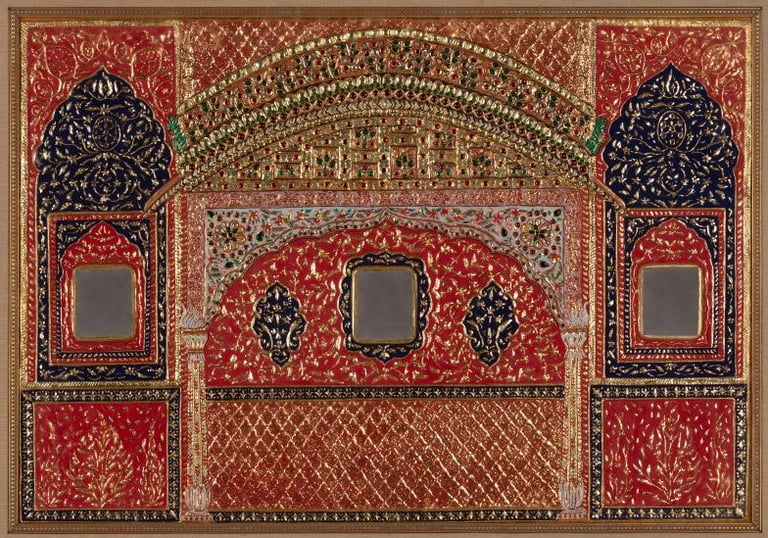
The Royal Coronation
Size: 18 x 25 inches (without frame)
Medium: Gold foil work with semi precious stones
Year: 2010
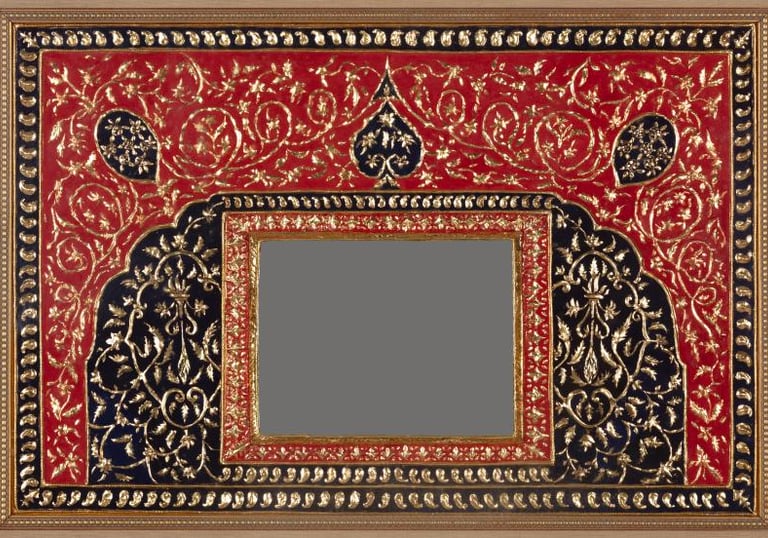
THE DURBAR HALL
The canvas captures the durbar hall with enamelled walls, mirrors and semi-precious stones.
The Durbar Hall
Size: 18 x 12 inches (without frame)
Medium: Gold foil work and water colour
Year: 2010
THE ROYAL CORONATION
Inspired by the intricate walls at the throne room, the vibrancy of colours and the romance of the royalty - this piece of art is an embellishment on canvas with gold foil used in Tanjore art form. It is my adaptation of royalty in a frame.

Shahjahan was the fifth emperor of Mughal empire (1628–1658) and it is under him that the Mughals reached the peak of their architectural achievements and cultural glory. Mumtaaz, his favourite queen was bestowed the title by him… Mallika-i-jahan (queen of the world), highest honour of the land for her trustworthiness and heart of gold. Taj mahal was built as a tomb for Mumtaaz by Shahjahan as a mark of his undying love.
The self-made canvases in Tanjore style, with blended water colours, oils and mixed media are my attempt to capture the essence of this exquisite mausoleum.
THE TAJ COLLECTION
THE TAJ ENSEMBLE
A grand composition that brings together the Taj’s most iconic elements—its domes, arches, jaalis, and reflective symmetry. This piece captures the monument the way the world first remembers it: majestic, serene, and impossibly perfect. A centerpiece for collectors who want the full presence of the Taj in a single frame.
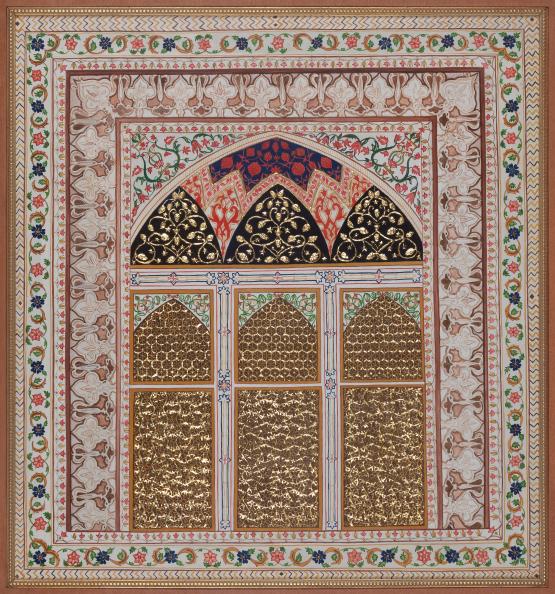
The Taj Ensemble
Size: 20 x 22 inches (without frame)
Medium: Gold foil work and water colours
Year: 2009
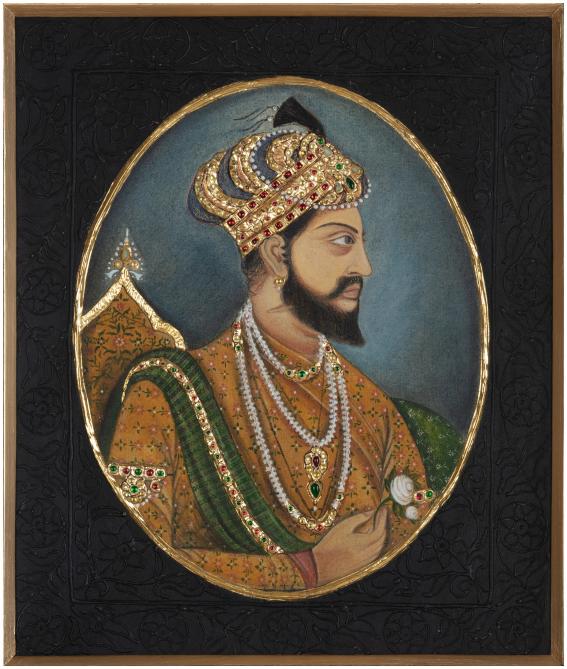
SHAH JAHAN
This portrait honors Shah Jahan as both emperor and artist—an aesthete who imagined beauty so enduring that it outlived centuries. The artwork offers a regal portrayal in rich textures and gilded accents, capturing his legacy, ambition, and profound devotion.
Shah Jahan
Size: 11 x 14 inches (without frame)
Medium: Oil paints and Tanjore style work with semi-precious stones and gold foil work.
Year: 2009
The visionary behind the world’s greatest ode to love.
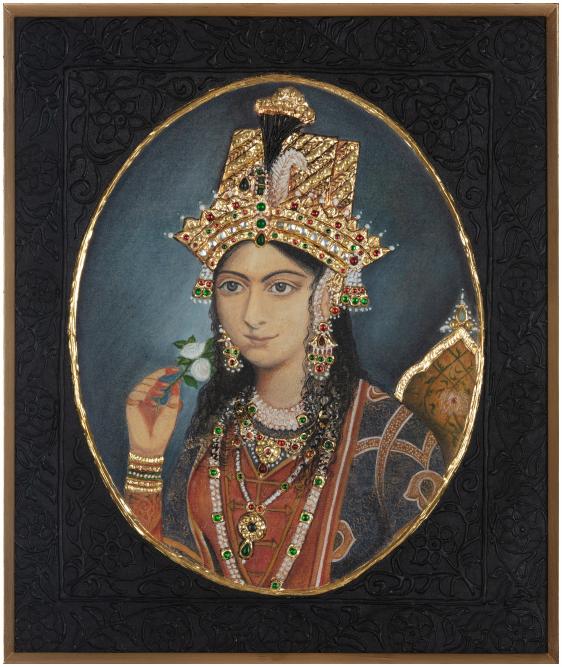
MUMTAZ MAHAL
A tribute to Mumtaz—the muse, the heartbeat, the inspiration. This piece reflects her elegance, softness, and the quiet strength that inspired the Taj Mahal’s creation. A luminous blend of femininity and heritage, crafted to evoke emotion with every glance.
Mumtaz Mahal
Size: 11 x 14 inches (without frame)
Medium: Oil paints and Tanjore style work with semi-precious stones and gold foil work.
Year: 2009
Grace immortalized in gold and marble tones.

THE JAALIS OF TAJ
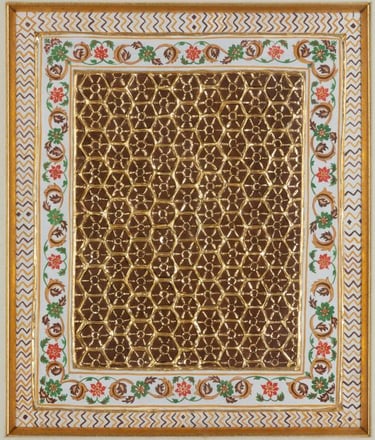
Taj Jaali – Sitara
Size: 10 x 12 inches (without frame)
Medium: Gold foil work and water colours
Year: 2008
Taj Jaali – Noor
Size: 10 x 12 inches (without frame)
Medium: Gold foil work and water colours
Year: 2008
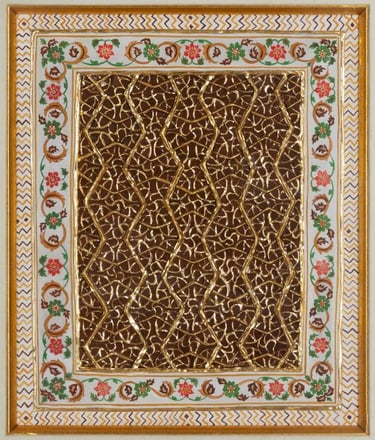
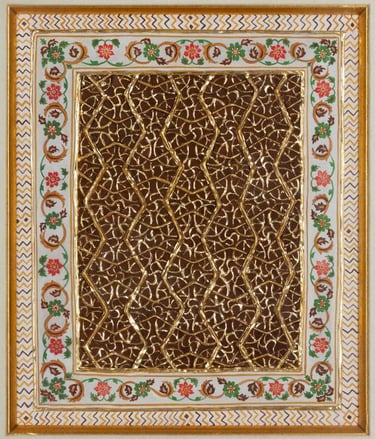
Taj Jaali – Guldasta
Size: 10 x 12 inches (without frame)
Medium: Gold foil work and water colours
Year: 2023
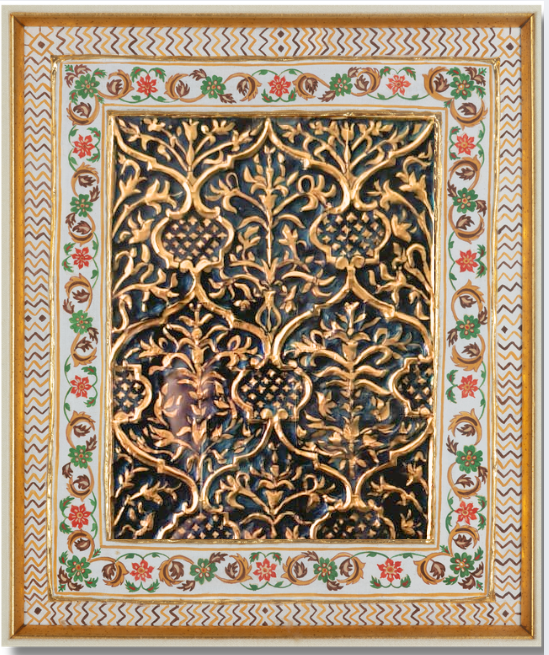
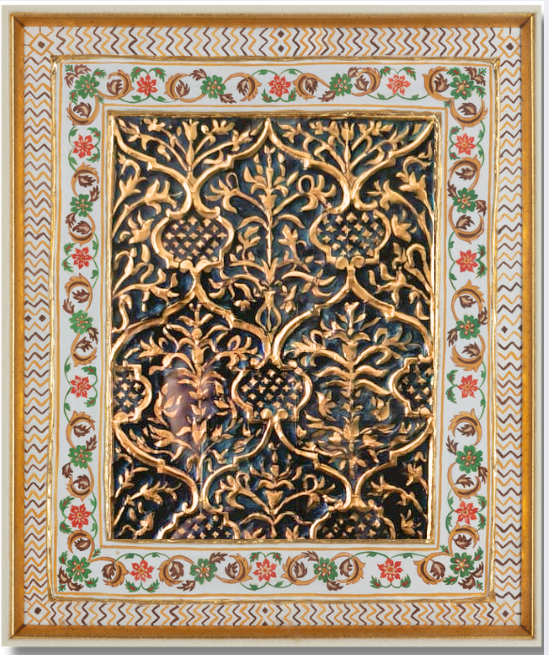
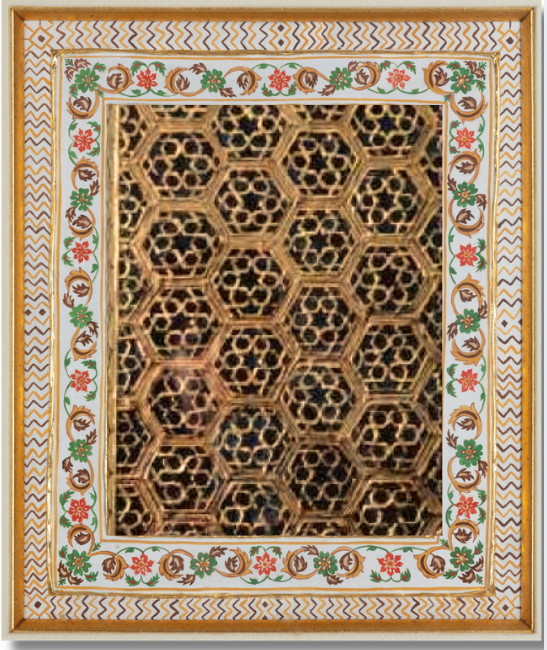
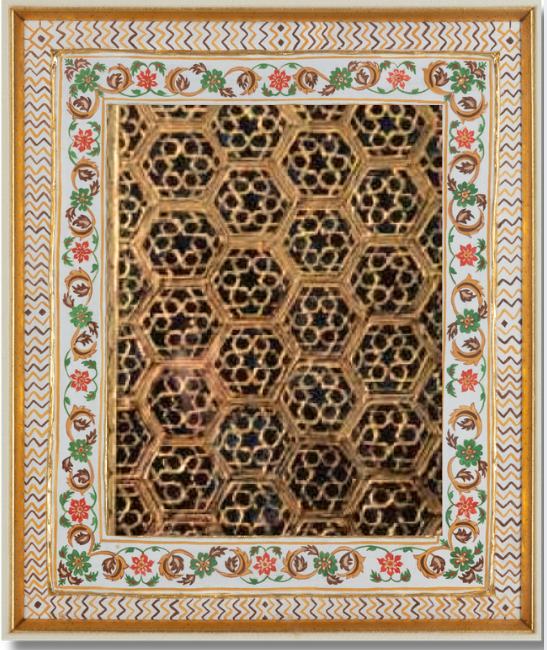
Taj Jaali – Madhuban
Size: 10 x 12 inches (without frame)
Medium: Gold foil work and water colours
Year: 2023
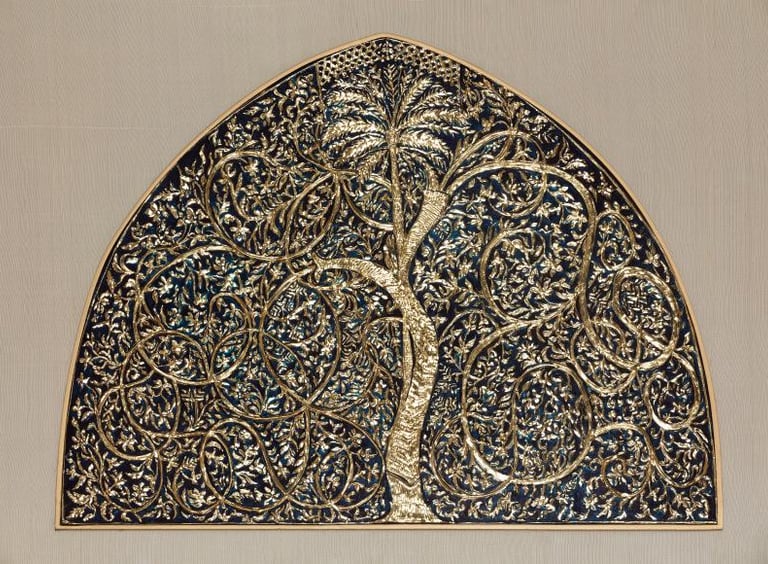
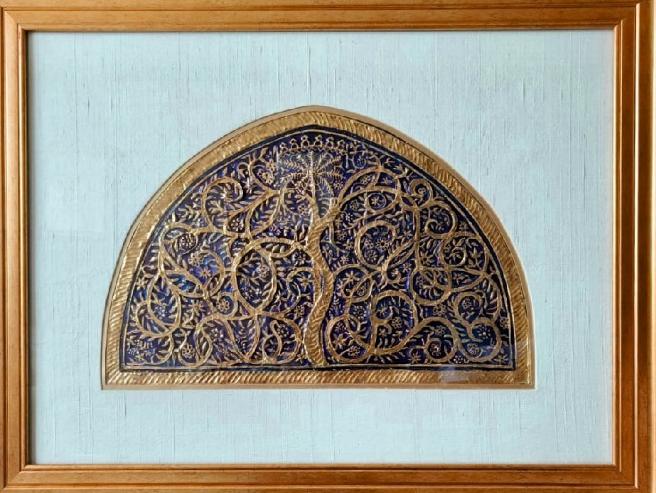
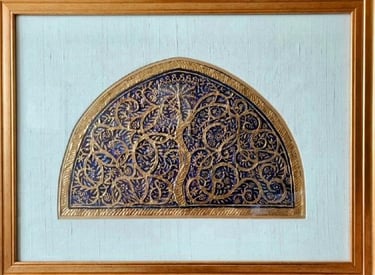
Inspired by the jaali from Siddi Sayyed Mosque in Ahmedabad, built in 16th century, the design incorporates icons of both Hinduism and Islam. The tree is unique to Hinduism and the date palm is symbolic of the Islamic religion – testimony to the times of peaceful coexistence and harmony of the religions.
Personally, during COVID times, it was a symbol of abundance in our lives – to treasure with deep gratitude all that we have, with love and respect for one and all.
The Tree of Life
Size: 24 x 18 inches (without frame)
Medium: Tanjore foil work and water colours
Year: 2020
When Architecture Breathes Art
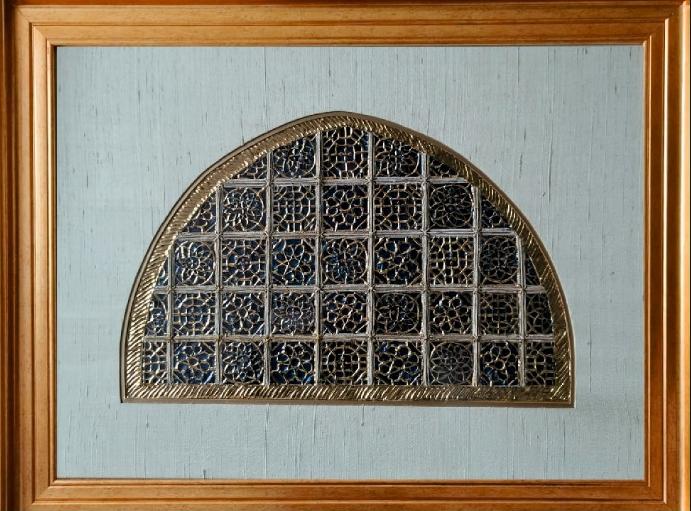
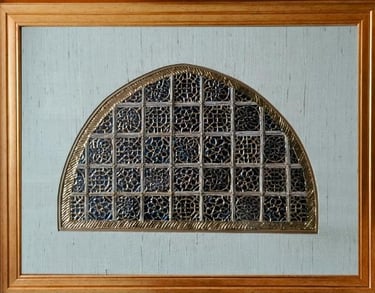
Mosaic Maze Jaali
Size: 17 x 11 inches (without frame)
Medium: Mixed media and Tanjore foil work
Confluence
Size: 17 x 11 inches (without frame)
Medium: Mixed media and Tanjore foil work
SIDDI SAYYAD MOSQUE
AJANTA ELLORA CAVES
Art that reflects the quiet strength and boundless compassion of the Enlightened One.
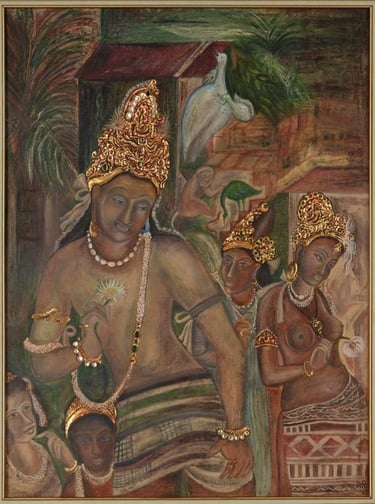
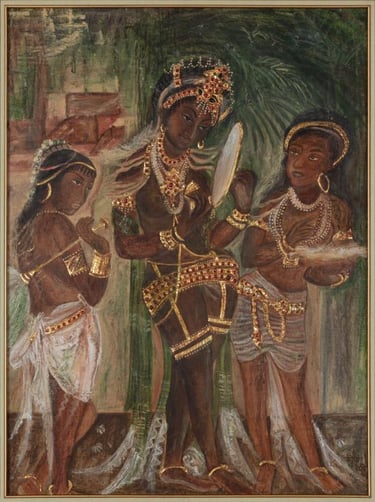
I remember visiting the Ajanta caves as a little girl, and I was completely mesmerised with the intricacy and detailing inside the caves. After many decades, I revisited the caves in my mind, and decided to recreate them using my skill set. I used oil paints on a hand-made canvas with a knife technique to texturize the background. All the jewels were brought to life using the Tanjore technique of using gem stones and covering them with gold foil. It is indeed a pity that the frescoes at Ajanta are now almost cordoned off to protect what is left in the caves from any further denudation.
BODHISATTVA PADMAPANI
This art work is inspired by the Bodhisattva Padmapani panel at the Ajanta caves (Cave No 1) which was created in the 6th Century in the heart of the Deccan Plateau.
The Crown Prince
Size: 18 x 24 inches (without frame)
Medium: Knife with Oil Painting
Year: 2003
BATHING BEAUTIES
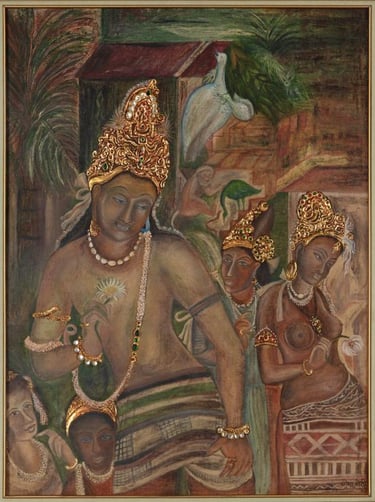
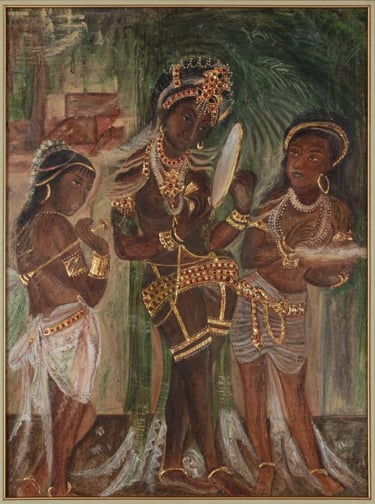
Inspired by the art in the Ajanta Cave No. 17, this canvas portrays the age-old practice of beautifying the royalty. After the royal bath, the maids are pampering the Princess with a fan in their hands and sheer admiration in their eyes. The women were dressed in sheer, a translucent material which was in vogue then.
Bathing Beauties
Size: 18 x 24 inches (without frame)
Medium: Gold foil and oil painting
Year: 2003
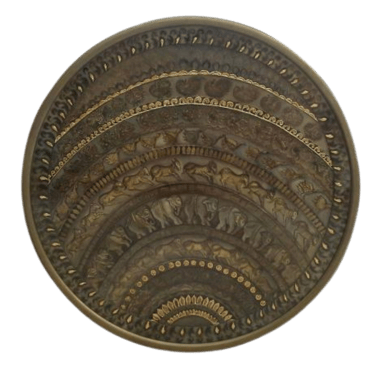
THE MOONSTONE
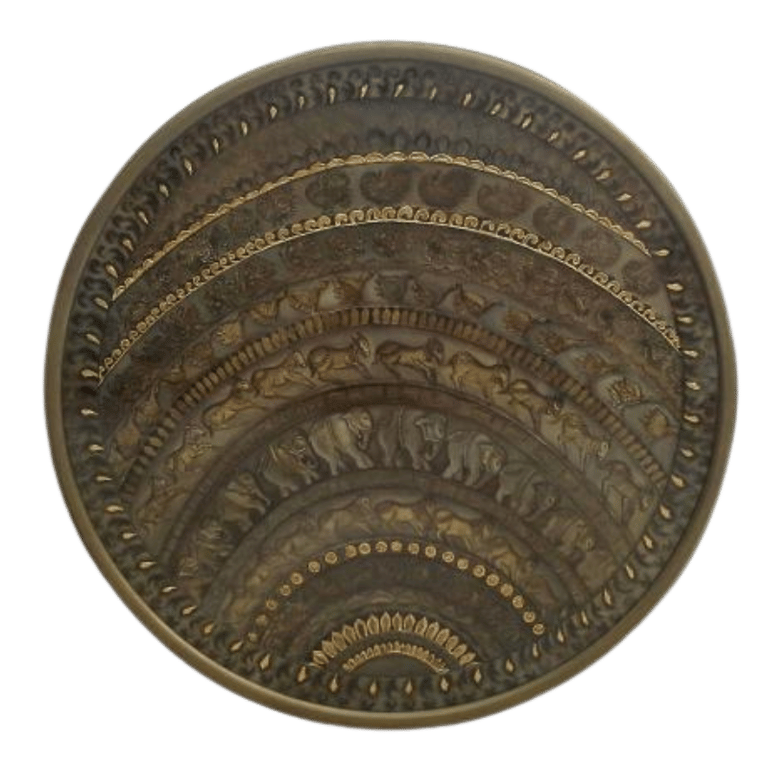
Inspired by the beautiful stone art at Anandpuram, Sri Lanka, which is a UNESCO site with a Buddha Temple. The stone engravings of horses, elephants, geese, lotus petals, and peacock fascinated me, symbolising speed, wisdom, openness and beauty in our lives.
Moonstone
Size: 36 inches diameter
Medium: Oils and paste work with powdered clay
Year: 2022
THE QUTUB
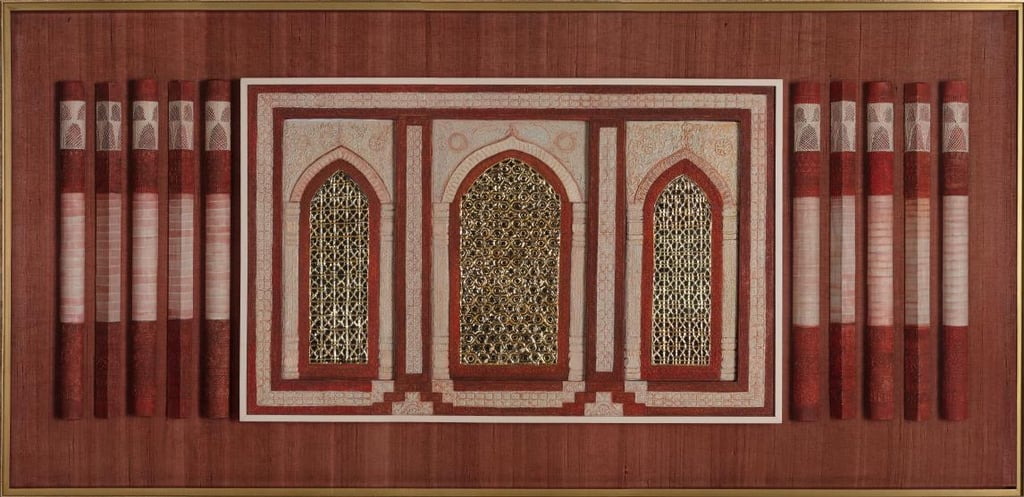
The Qutb Minar, the tallest stone tower in the world (72.5 mtrs) beckoned me with its commanding architecture, its expanse within its compound showcasing the might of the many Delhi Sultanate rulers. For the first time in the 14th century, red and white stones were used in the South gateway of the Qutb complex by Allauddin and this beautiful combination inspired me to create this canvas. The lotus roundels on the marble arches and kalash in the pillars are noteworthy Hindu contributions by the artisans to Islamic architecture. The lowest storey of Qutb Minar, has angular flanges and rounded flutes alternating with one another. Also the jaalis forming atop each floor with beautiful carvings near the balconies inspired the side panels on the canvas. Personally, the compound area in the Qutb complex is my favourite area, as Razia sultan – the first female Muslim ruler of the subcontinent, had presented herself here, donning in red, as the rightful heir to the throne.
THE JHAROKHA COLLECTION
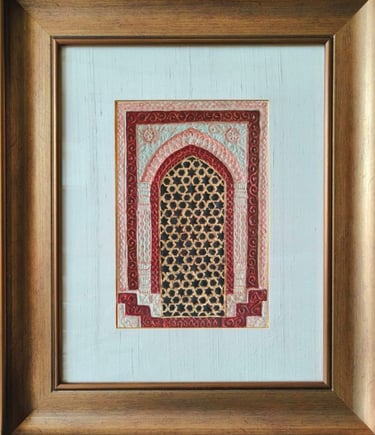
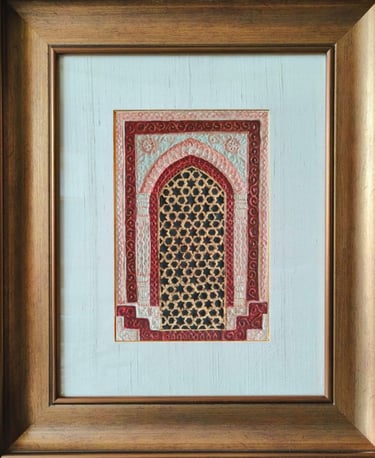
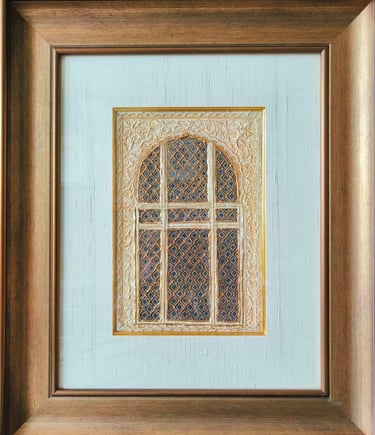
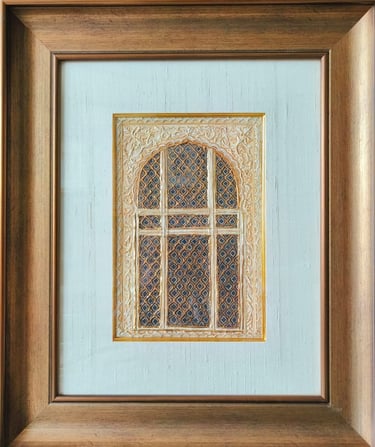
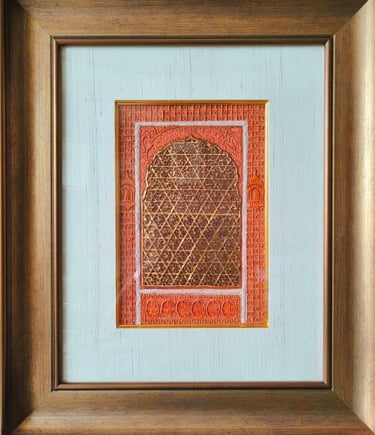
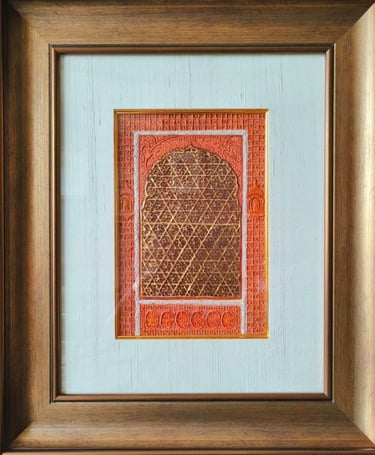
Bibi ka Makbara
Size: 8 x 12 inches (without frame)
Medium: Tanjore foil work and water colour
Year: 2024
Jaisalmer Fort
Size: 8 x 12 inches (without frame)
Medium: Tanjore foil work and water colour
Year: 2024
Qutb Minar
Size: 8 x 12 inches (without frame)
Medium: Tanjore foil work and water colour
Year: 2024
AHMEDABAD
Where Craft Meets Cosmos
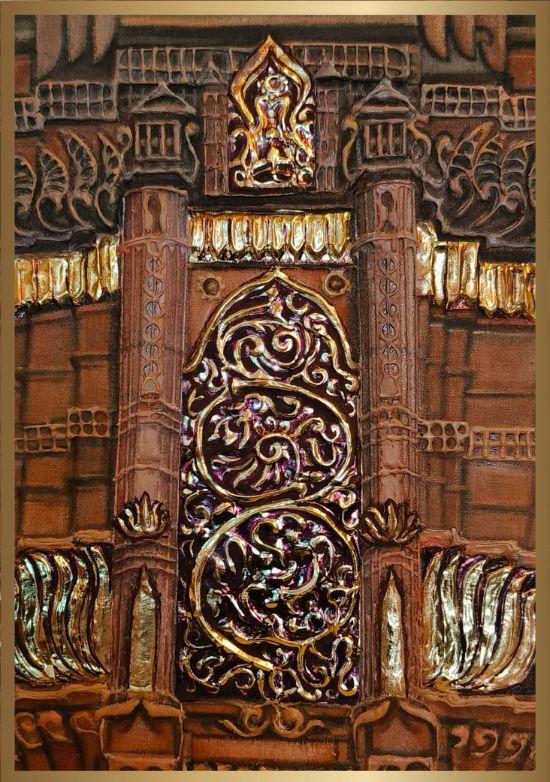
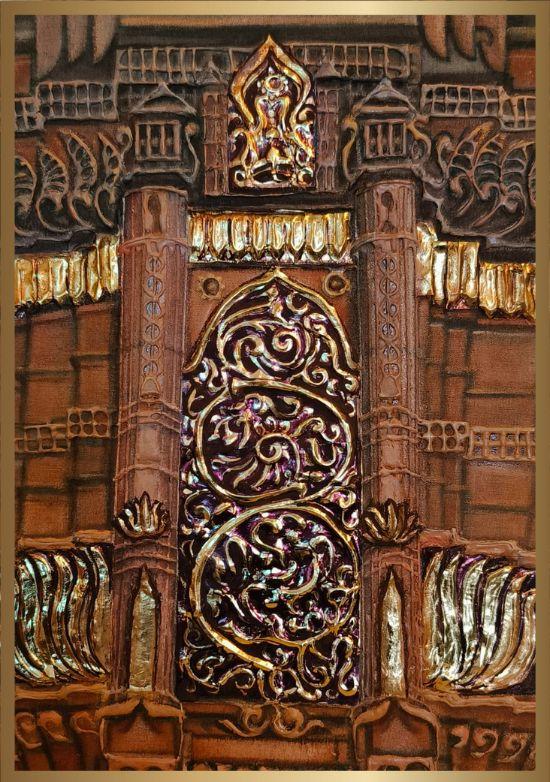
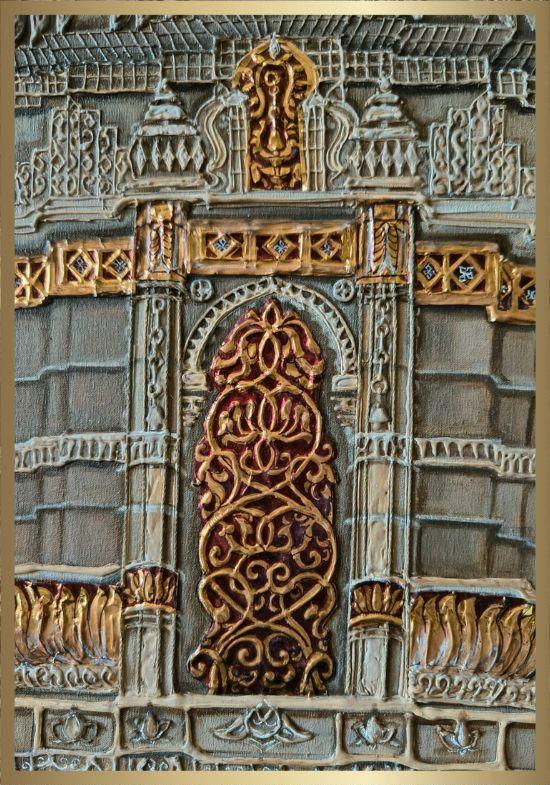
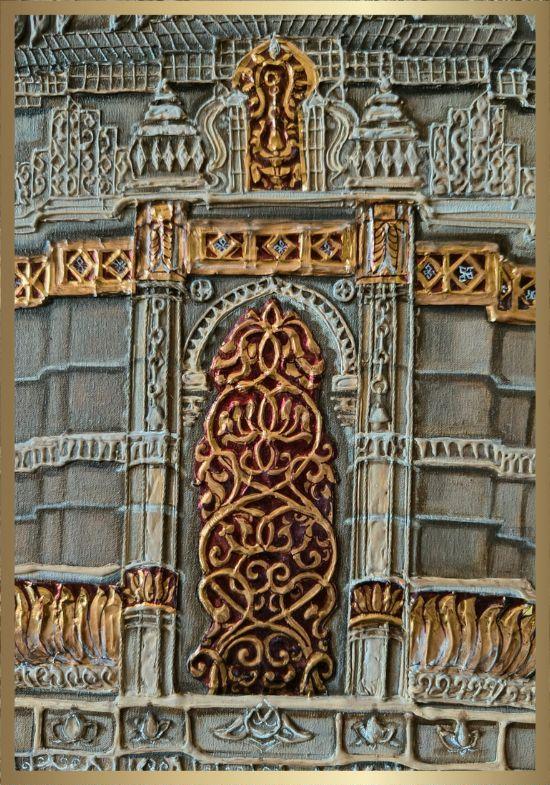
Jaali Champaner
Size: 8x12 inches (without frame)
Medium: Mixed Media
Year: 2024
Mosque Jaali
Size: 8x12 inches (without frame)
Medium: Mixed Media
Year: 2024
HAWA MAHAL
The Crowning Glory
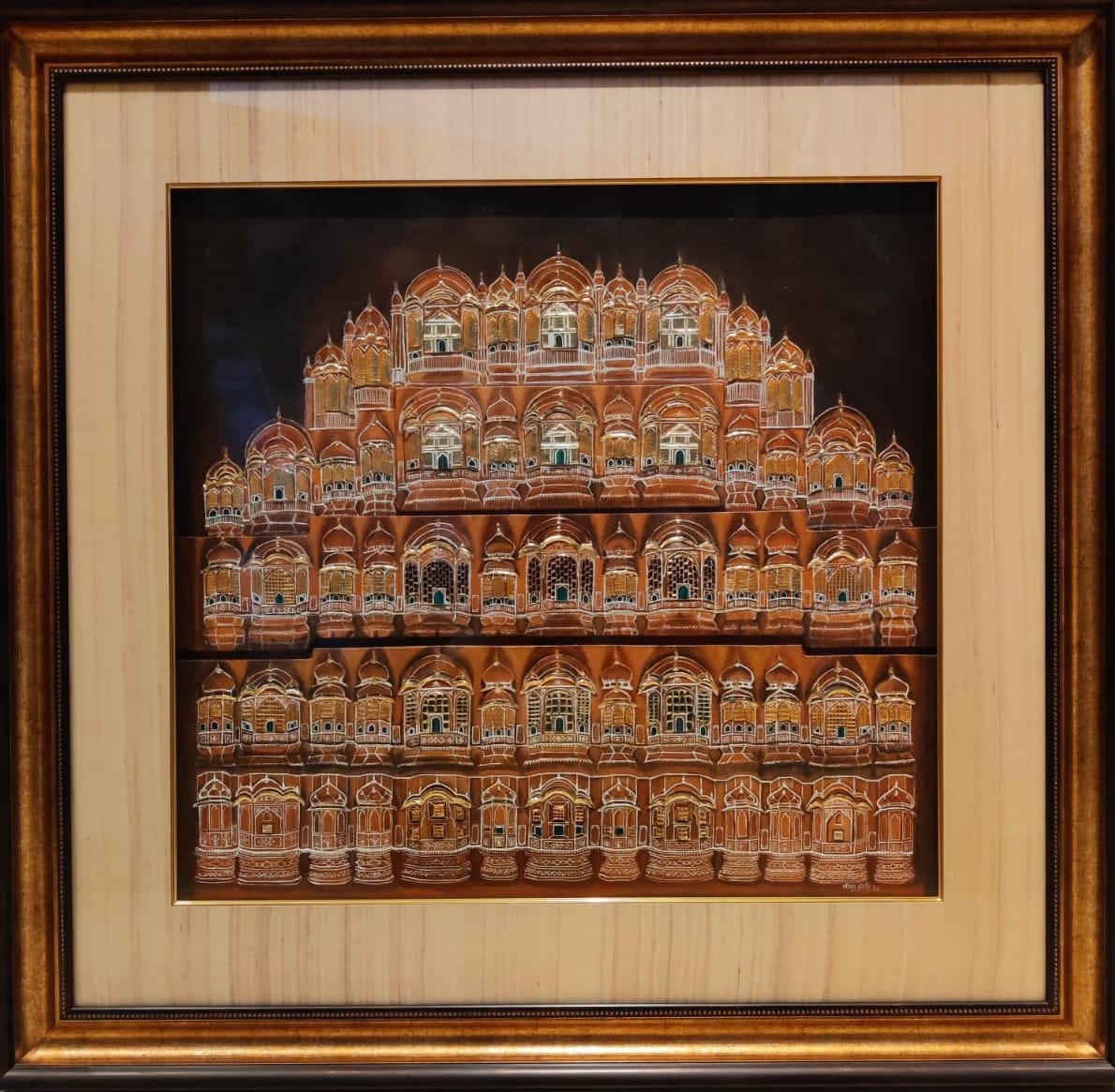
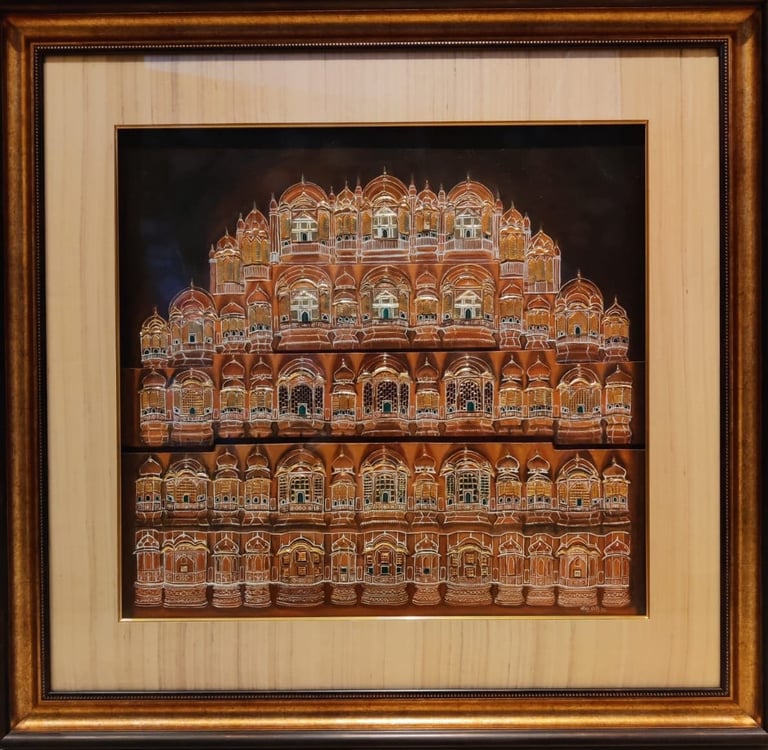
Hawa Mahal
Size: 43 x 45 inches inches (without frame)
Medium: Mixed Media and Tanjore style work with gold foil
Year: 2023
The crowning glory captures the shimmering facade of Hawa Mahal, Jaipur. This palace of winds not only brought in the coolest winds but also presented a peep into the outside world for the women folk, for whom it was built in 1799 by Maharaja Sawai Pratap Singh. The facade also resembles the Mohan Mukut as the ramps would lead up to the shrine of Lord Krishna on the 5th floor of the palace.
THE KONARK WHEEL
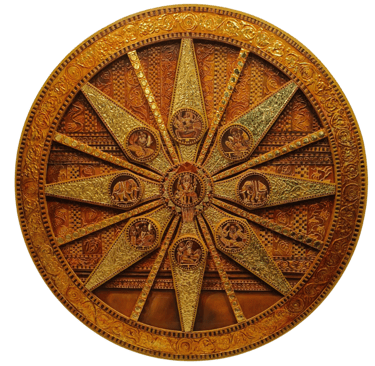
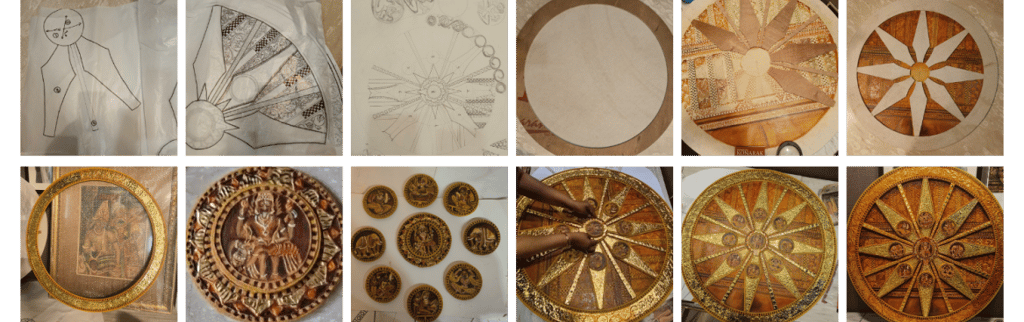
Inspired by the majestic Konark Sun Temple, this 36-inch Konark Wheel is a homage to one of India’s most iconic symbols of time, celestial rhythm, and architectural brilliance. The wheel, historically representing the cycle of life and the precision of ancient Indian science, is reimagined here through the opulence of Tanjore gold-foil work and richly layered oil paints. Every spoke, motif, and carving is meticulously highlighted to echo the depth and grandeur of the original stone sculpture. The interplay of gold and colour brings a luminous, almost divine radiance, transforming the wheel into a living mandala of movement and light. This piece stands as a celebration of heritage—timeless, resplendent, and reborn through contemporary hands.
The Konark Wheel
Size: 36 inches diameter (without frame)
Medium: Multilayered canvas with gold foils and oils
Year: 2025
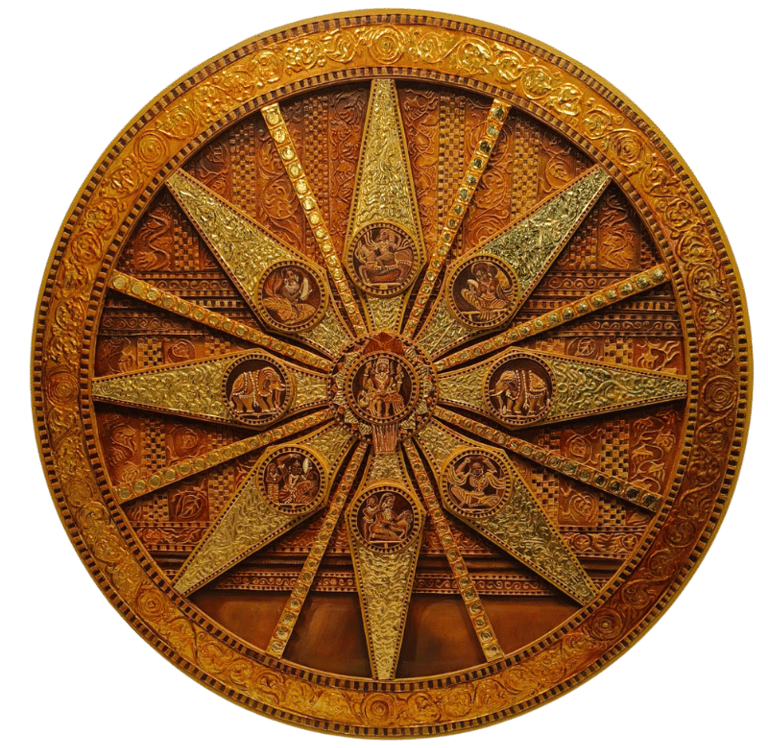
Making of The Konark Wheel
The Making of the Konark Wheel
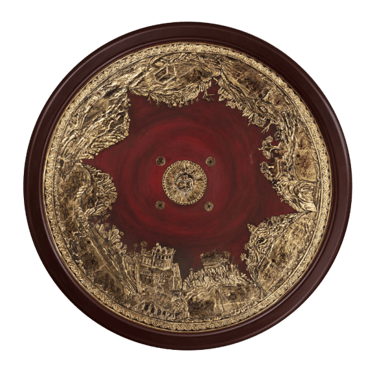
THE ROYAL SHIELD
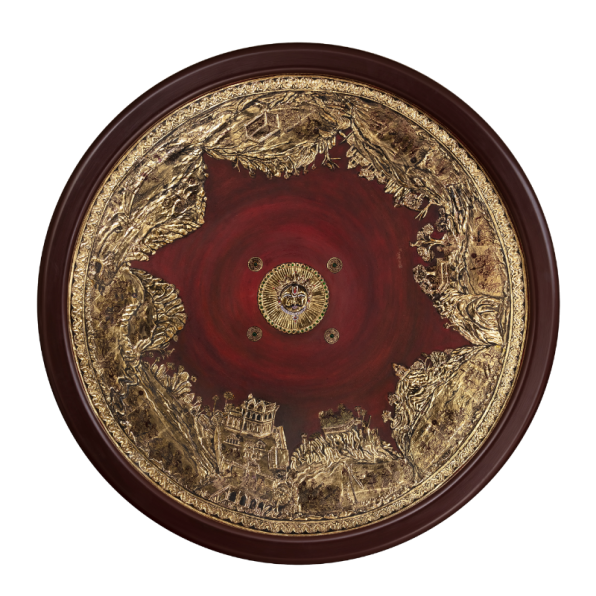
Maharana Sangram Singh II of Mewar wore an ornate shield made of gold and rhinoceros skin, a shield truly befitting the grandeur of his persona. When I saw the original shield at the National Museum, I was fascinated to delve deeper into the story depicted on the shield. Through nine scenarios beautifully embossed on the shield, the artisans depict the laurels of the king as he goes on a hunting expedition with his entourage. The journey takes them through forests and villages, crossing dams and winning fierce fights, with the soldiers taking refuge in trees and even sitting inside the cage to hunt the tiger. The company is rewarded by the royal family, awaiting to receive them at the doorstep with aarti thalis.
The Royal Shield
Size: 36 inches diameter (without frame)
Medium: Gold foil work and oils
Year: 2022
STEPWELL
Inspired by the Panna Meena Kund
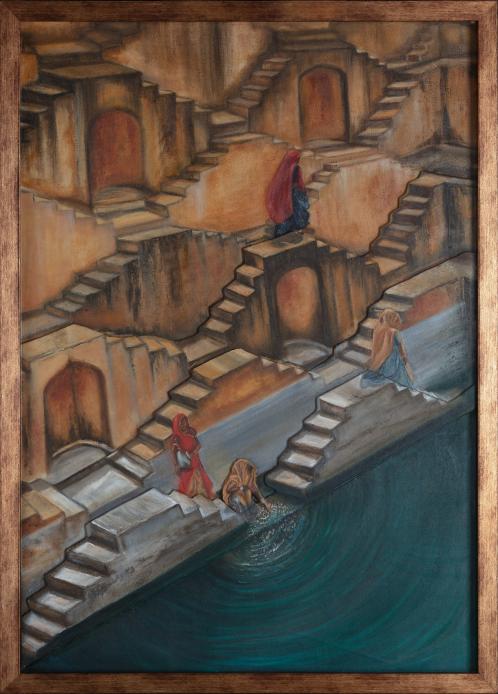
Stepwell
Size: 24 x 33 inches inches (without frame)
Medium: Oil painting with three-tier canvas
Year: 2021
Inspired by the Panna Meena Kund, Amer, Jaipur, so named because of the contrast of the yellow walls and emerald green water, present all around the year. Built by an eunuch in the court of Raja of Amer in the 16th century for the convenience of the public, this painting is a tribute to their thoughtfulness and attitude. Here I have used a three-layered canvas to bring out depth, dimension, and symmetry of architectural beauty and oil paints to enhance the effects.
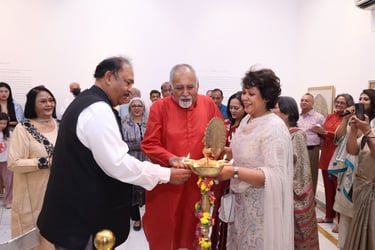
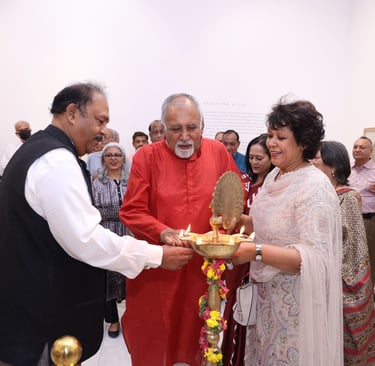
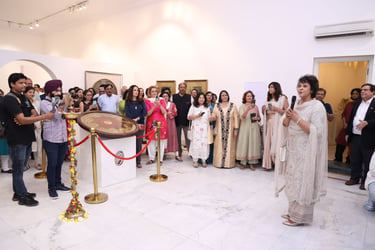
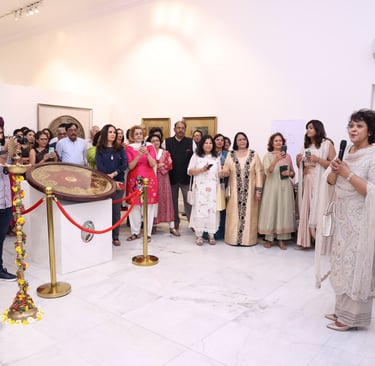
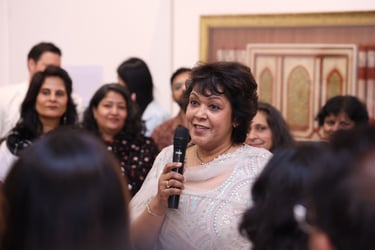
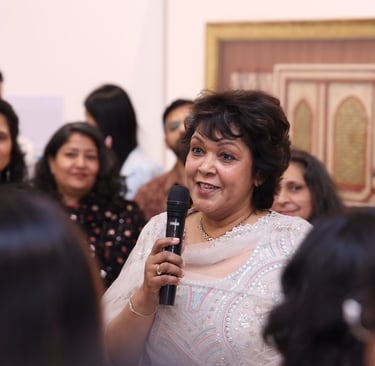
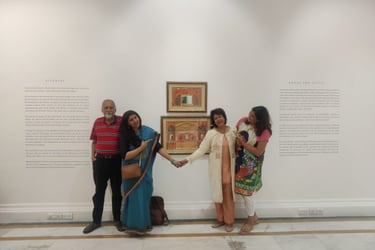
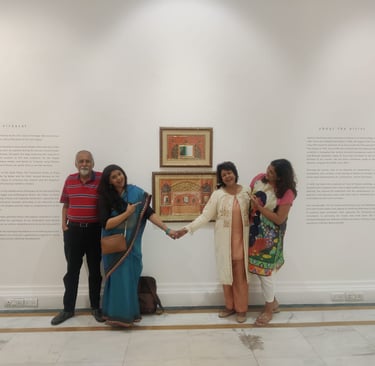
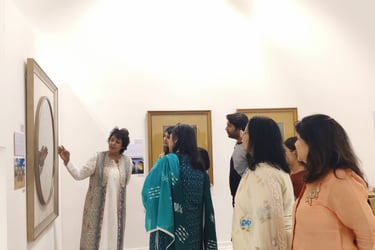
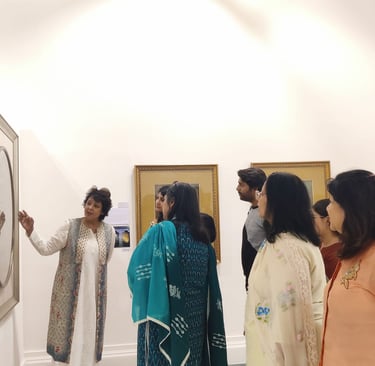
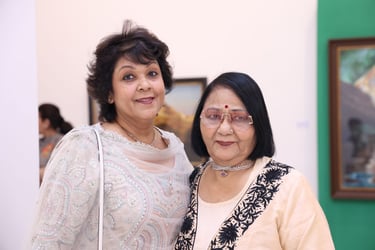
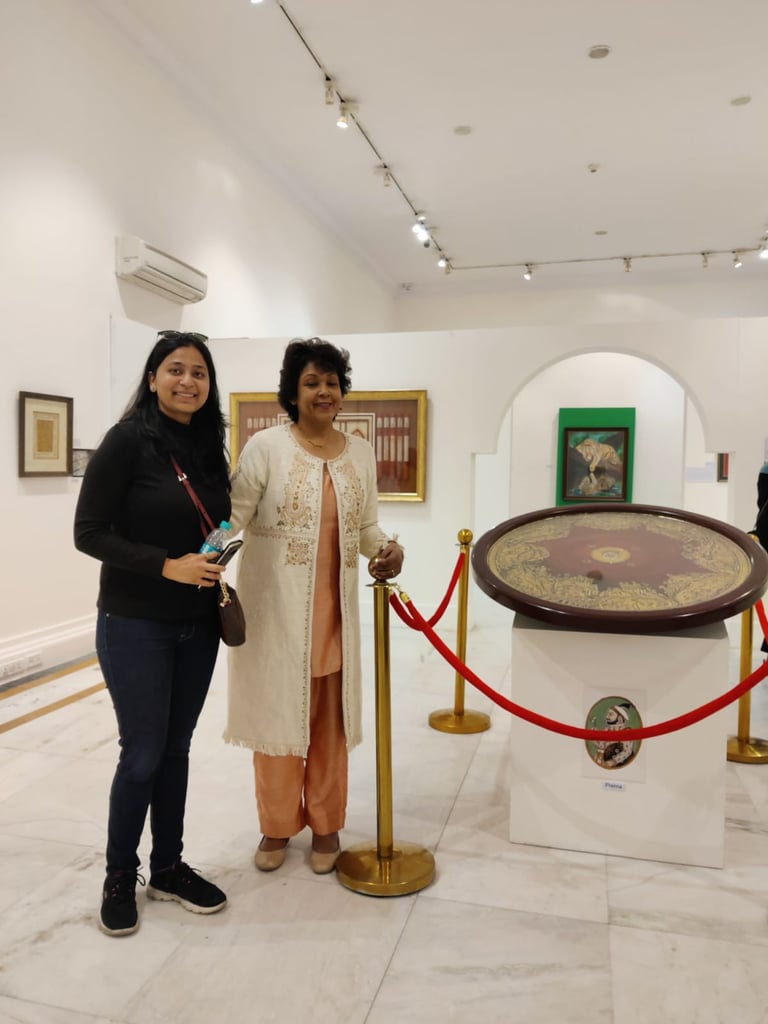
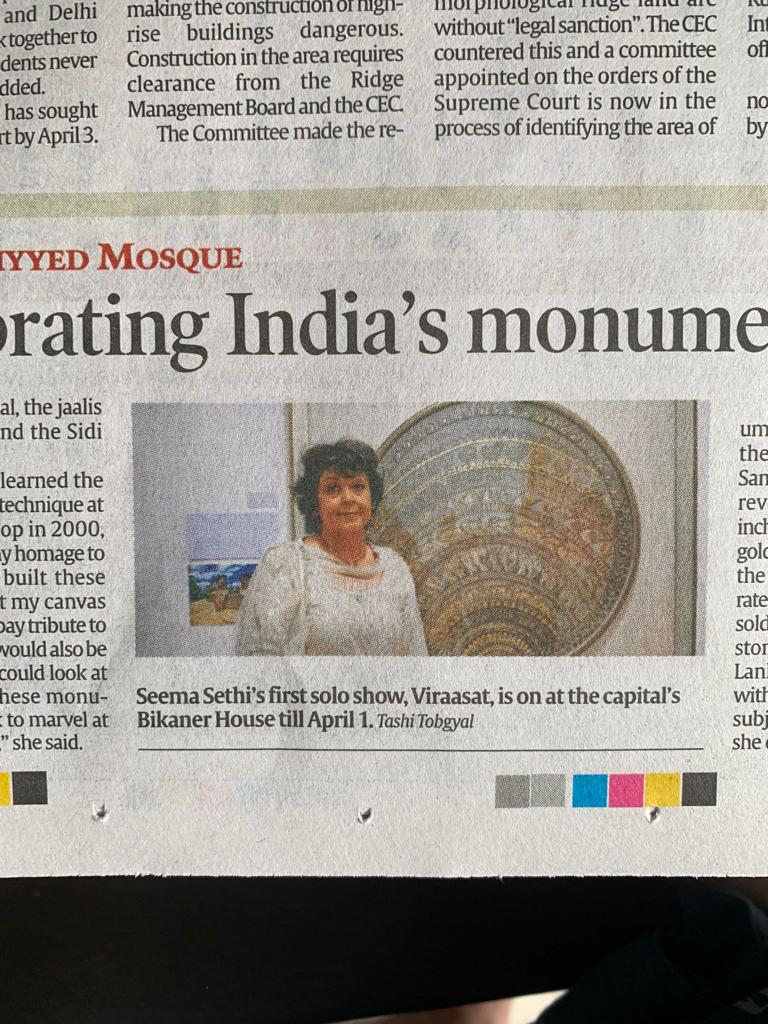
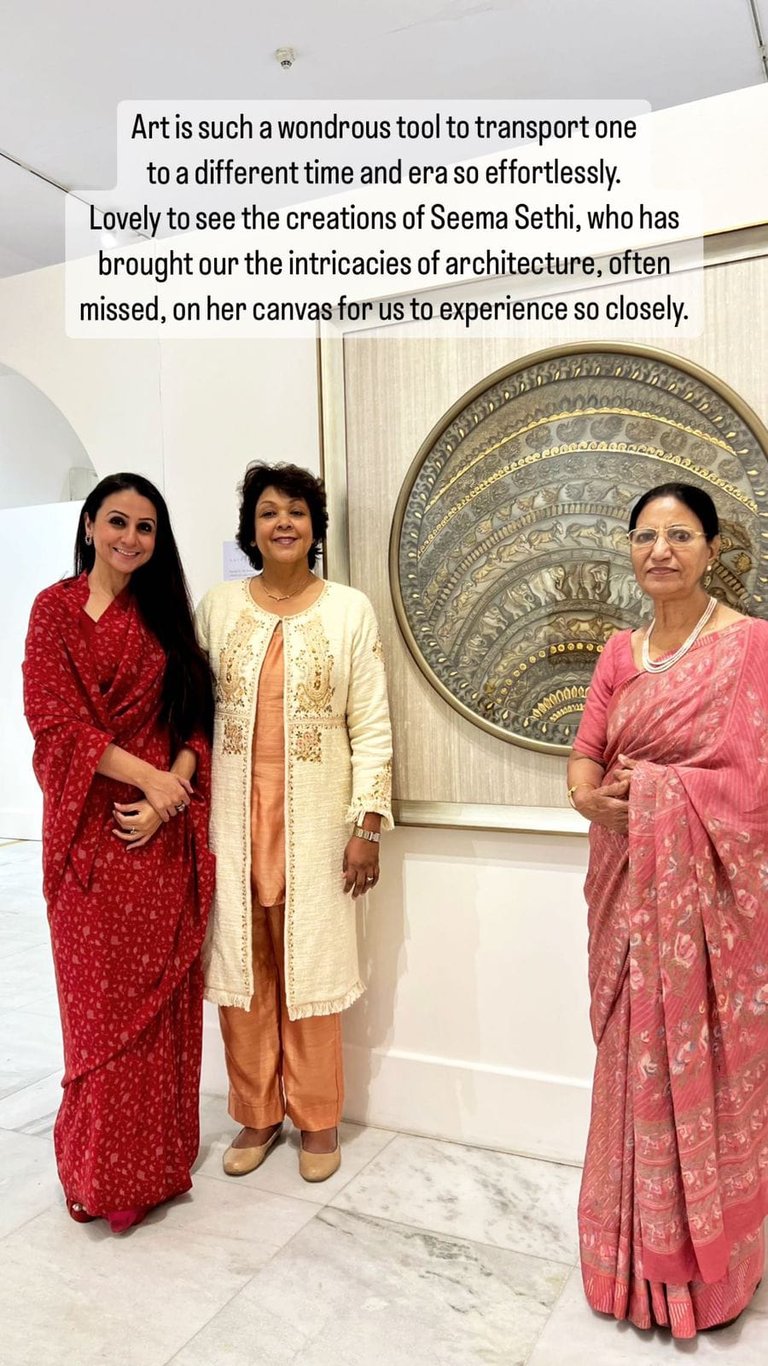
SOLO DEBUT
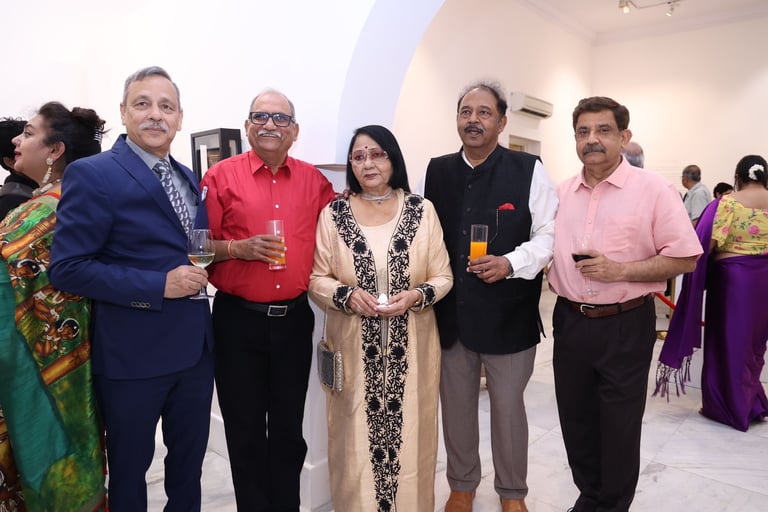
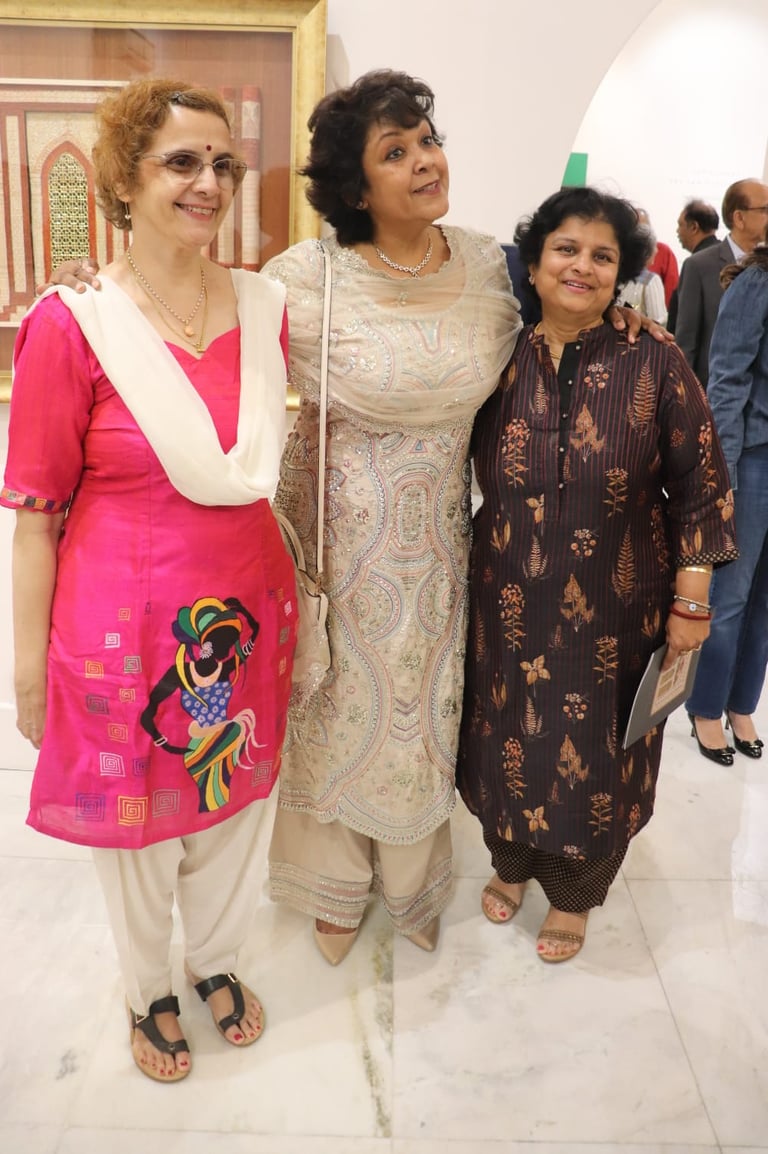
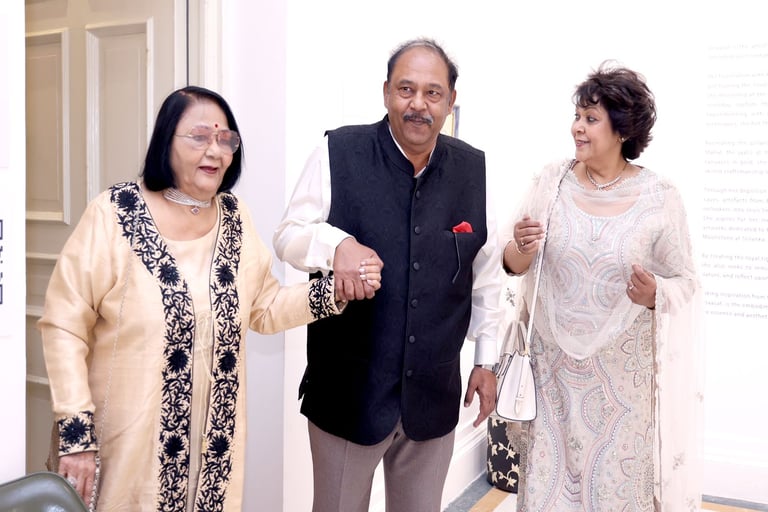
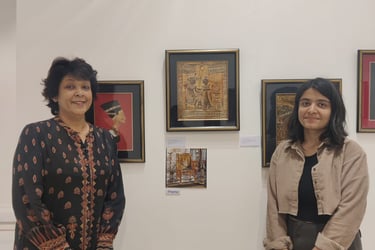
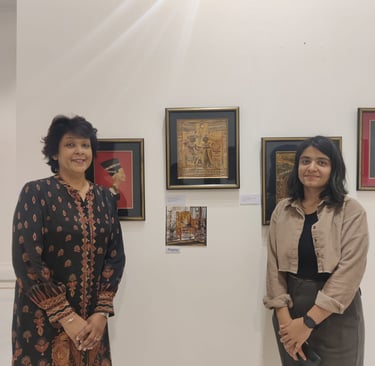
Bikaner House | 27th March 2023
A COLLECTION BEYOND TIME
Each artwork in the Viraasat Collection carries a piece of history and the unmistakable glow of Tanjore. If you wish to collect these timeless pieces of heritage, connect with me.